
Venom Peptides in Chronic Pain Research: Non-Opioid Analgesic Discovery
Dr. Samuel Ortega · Published 2026-03-12 · 8 min read
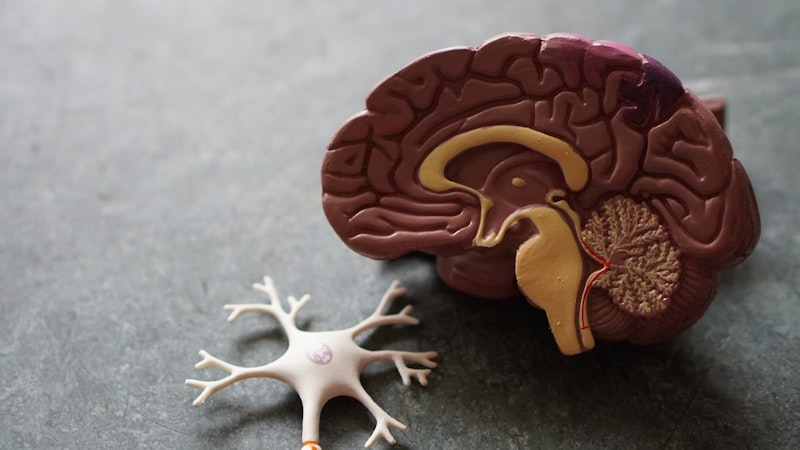
Overcoming the Opioid Dilemma Through Ion Channel Pharmacology
Chronic pain affects over 20% of the global adult population. Current clinical management relies heavily on $\mu$-opioid receptor agonists, which carry severe liabilities including rapid tolerance, physical dependence, hyperalgesia, constipation, and fatal respiratory depression.
To overcome this dilemma, translational neuropharmacology is focused on identifying peripherally restricted, non-opioid targets that suppress pain transmission directly at the level of primary afferent nociceptors and dorsal horn synapses. In this quest, animal venom peptides—specifically from cone snails, spiders, scorpions, and mambas—have emerged as the most potent, selective non-addictive molecular leads.
Key Pain Targets and Their Venom Modulators
1. Voltage-Gated Sodium Channel NaV1.7 (SCN9A)
Human genetic studies have validated $\text{NaV}1.7$ as the definitive “pain threshold” channel: loss-of-function mutations lead to Congenital Insensitivity to Pain (CIP), while gain-of-function mutations cause inherited erythromelalgia and paroxysmal extreme pain disorder:
- Challenge: Small-molecule inhibitors fail to achieve sufficient selectivity over the cardiac channel $\text{NaV}1.5$ (which causes fatal arrhythmias) and central $\text{NaV}1.1/\text{NaV}1.2$.
- Venom Solutions:
- Spider Gating Modifiers (ProTx-II, Huwentoxin-IV): Discovered in tarantula venom, these ICK peptides bind the extracellular S3-S4 loop of voltage-sensing domain II ($\text{VSD-II}$), locking the channel in the resting, closed state with $>100\text{-fold}$ selectivity over $\text{NaV}1.5$.
- $\mu$-Conotoxin Analogs: Cone snail peptides that physically plug the outer vestibule of the channel pore, exhibiting nanomolar inhibition of tetrodotoxin-sensitive nociceptive currents.
2. N-Type Calcium Channels: CaV2.2
Located at the presynaptic terminals of primary nociceptive fibers in the superficial laminae of the spinal dorsal horn (Rexed laminae I and II):
- Mechanism: Influx of $\text{Ca}^{2+}$ through $\text{CaV}2.2$ drives vesicular fusion and release of substance P, CGRP, and glutamate onto secondary projection neurons.
- Clinical Proof-of-Concept: Ziconotide (synthetic $\omega$-conotoxin MVIIA from Conus magus) is an FDA-approved non-opioid intrathecal analgesic for severe chronic refractory pain. It produces no physical dependence or tolerance.
- Next-Gen Variants: Synthetic $\omega$-conotoxin analogs (such as $\omega\text{-conotoxin CVIF}$) are actively investigated for improved therapeutic windows and systemic tolerability.
3. Acid-Sensing Ion Channels: ASIC1a & Mambalgins
Tissue acidosis is a hallmark of inflammation, arthritis, cancer pain, and ischemic injury:
- Mechanism: Proton buildup activates acid-sensing ion channels (ASIC1a and ASIC3) on sensory nerve endings, driving persistent pain signaling.
- Mambalgins: In 2012, researchers discovered mambalgins (57-amino acid three-finger peptides) in the venom of Dendroaspis polylepis (black mamba). Mambalgins inhibit heteromeric $\text{ASIC}1\text{a}/\text{ASIC}2\text{a}$ and homomeric $\text{ASIC}1\text{a}$ channels with $IC_{50} \approx 50\text{ nM}$.
- In rodent models, systemic or intrathecal administration of mambalgins achieves analgesia as potent as morphine, but without respiratory depression, motor impairment, or tolerance.
4. TRP Channels (TRPV1 and TRPA1)
Thermal, chemical, and mechanical inflammatory pain pathways converge on transient receptor potential channels:
- Spider venom peptides (such as the Theraphosa modulators) target the outer gating pore of TRP channels, permitting fine-grained dissection of neurogenic inflammation.
Comparing Analgesic Mechanisms: Opioids vs. Venom Peptides
| Parameter | Opioid Receptor Agonists | Venom Peptide Antagonists (NaV1.7 / CaV2.2) |
|---|---|---|
| Site of Action | Central Nervous System (CNS) $\mu$-receptors | Primary afferent terminals & dorsal horn synapses |
| Tolerance Liability | Rapid (receptor internalization / desensitization) | Minimal to absent in longitudinal models |
| Addiction Potential | High (mesolimbic dopamine reward pathway) | Zero addictive liability |
| Respiratory Depression | Life-threatening dose-limiting toxicity | Absent at therapeutic analgesic concentrations |
| Mechanistic Readout | Generalized CNS sedation | Direct voltage-gated ion flux inhibition |
Experimental Guidelines for Pain Researchers
When designing in vitro or in vivo nociceptive screening campaigns with venom peptides:
- Electrophysiological Recording: Use whole-cell patch clamp on dissociated dorsal root ganglion (DRG) neurons to capture native channel subunit combinations and auxiliary $\beta$-subunits.
- Peptide Delivery: For large disulfide-rich peptides unable to cross the blood-brain barrier, use intrathecal (IT) catheterization or formulation with cell-penetrating peptide (CPP) conjugates.
- Control Standards: Benchmark novel analgesic leads against validated peptide standards such as PTX-PPT-002 $\mu$-Conotoxin Analog or PTX-MTX-001 $\omega$-Conotoxin CVIF.
Explore our Pain Research Application Guide or review our high-purity Spider Venoms.
Authored by the Venom Supplies Scientific Team in collaboration with Latoxan S.A.S. (Portes-lès-Valence, France). All biological samples, purified peptide fractions, and immunization reference standards described in this article are available for academic and pharmaceutical procurement under CITES protocols.
Explore Related Toxinology Silos
Accelerate your laboratory experiments with authenticated reagents and standards.