
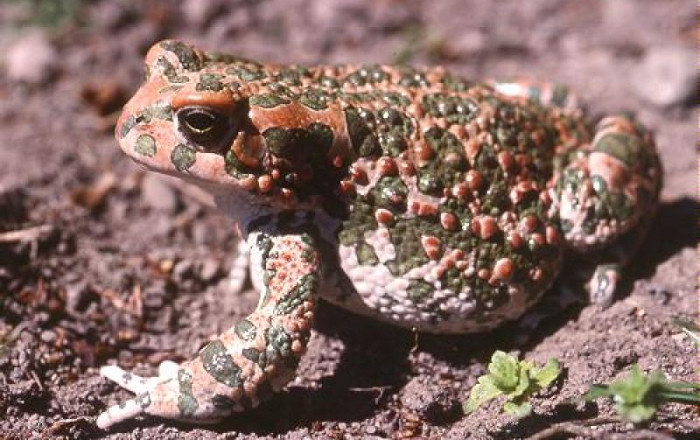
Bioactive Chemistry of Amphibian Secretions
Amphibian cutaneous and parotoid secretions represent one of nature’s most diverse pharmacological repositories. Unlike the purely proteinaceous venoms of most snakes, amphibian secretions feature a synergistic combination of cardiotonic steroids (bufadienolides), biogenic amines (indolealkylamines), lipophilic alkaloids, and antimicrobial peptides (AMPs).
Supplied through the established heritage of Latoxan S.A.S., Venom Supplies provides lyophilized whole venoms and enriched fractions from taxonomically authenticated specimens of Rhinella, Bufo, and Bombina. Every preparation undergoes standardized extraction and chromatographic validation to ensure batch-to-batch reproducibility across cellular assays, patch-clamp recordings, and receptor binding studies.
Key Pharmacological Classes in Amphibian Venoms
1. Bufadienolides & Cardiotonic Steroids
Bufadienolides are $\text{C}_{24}$ steroids characterized by a six-membered $\alpha$-pyrone ring at position $\text{C}-17$. They function as potent, high-affinity inhibitors of the cell-membrane enzyme $\text{Na}^+/\text{K}^+\text{-ATPase}$:
- Primary Compounds: Bufalin, marinobufagenin, resibufogenin, telocinobufagin, and cinobufagin.
- Mechanism of Action: Competitive binding to the extracellular $\alpha$-subunit of the sodium-potassium pump locks the enzyme in the phosphorylated ($\text{E}_2\text{-P}$) conformation. This increases intracellular sodium concentrations, subsequently stimulating sodium-calcium exchange ($\text{NCX}$) to elevate cytosolic calcium levels, inducing positive inotropy.
- Oncology Research: Bufalin and resibufogenin demonstrate selective apoptotic cytotoxicity against leukemia, breast adenocarcinoma, and non-small cell lung cancer cell lines through mitochondrial cytochrome c release and caspase-3 activation.
2. Biogenic Amines & Alkaloids
Amphibian parotoid secretions contain elevated concentrations of neurotransmitter derivatives:
- Bufotenine (5-hydroxy-N,N-dimethyltryptamine): Acts on serotonergic $5\text{-HT}_1$ and $5\text{-HT}_2$ receptor subtypes.
- Dehydrobufotenine & Bufothionine: Stable quaternary amine conjugates valuable for neuropharmacology and receptor autoradiography.
- Dopaminergic & Histaminergic Ligands: Useful for evaluating blood pressure regulation and autonomous nervous signaling.
3. Host-Defense & Antimicrobial Peptides
The skin of species such as Bombina bombina and Bombina variegata secretes linear and disulfide-bridged cationic amphipathic peptides:
- Bombinins & Bombinin-H: Naturally contain D-amino acids that confer resistance to mammalian proteolytic degradation.
- Membrane Disruptive Activity: Form transmembrane toroidal pores in microbial membranes, demonstrating selective bactericidal and fungicidal efficacy without hemolytic cross-reactivity at therapeutic windows.
Research Applications & Assays
| Assay / Field | Target Mechanism | Recommended Reagents |
|---|---|---|
| Cardiovascular Pharmacology | $\text{Na}^+/\text{K}^+\text{-ATPase}$ isoform selectivity ($\alpha_1$ vs. $\alpha_2/\alpha_3$) | Rhinella marina, Rhinella schneideri |
| Cardiac Arrhythmia Models | Intracellular $\text{Ca}^{2+}$ oscillation & triggered activity | Bufo bufo, Bufo gargarizans |
| Antimicrobial Discovery | Pore formation in gram-negative & gram-positive membranes | Bombina variegata, Bombina bombina |
| Neuromuscular Research | Nicotinic & Serotonergic neurotransmission modulation | Duttaphrynus melanostictus |
Ethical Collection & Quality Standards
At Venom Supplies, our amphibian collection protocols strictly protect animal welfare and environmental sustainability:
- Non-Destructive Sourcing: Venoms are collected by gentle manual massage of parotoid glands by trained herpetologists. Specimens are maintained in climate-controlled biosecure vivariums or safely released back to verified capture zones under veterinary inspection.
- Immediate Cryo-Stabilization: Collected glandular secretions are immediately transferred to sterile glass vials at $-80^\circ\text{C}$ to inhibit endogenous enzymatic degradation.
- Lyophilization & Purity Dossier: Freeze-dried under vacuum ($<0.05\text{ mbar}$) into fine, stable powder accompanied by LC-MS profiling, moisture content analysis ($<3%$), and heavy-metal testing.
- Safety & Handling: Amphibian venoms are categorized as Biohazard Level 6.1 (Toxic). Handle with personal protective equipment (PPE), nitrile gloves, and HEPA-filtered biosafety enclosures.
Explore our catalog of Amphibian Venoms or contact our scientific staff for custom fractionations.