
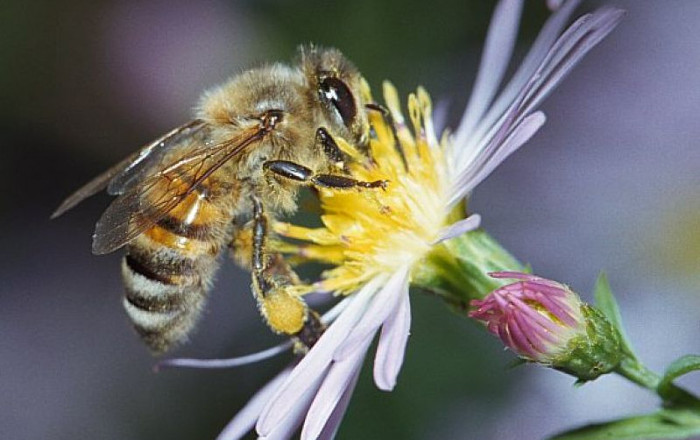
Molecular Architecture of Hymenoptera Venoms
The venoms of insects belonging to the order Hymenoptera (including honey bees, paper wasps, yellowjackets, and hornets) represent masterfully optimized biochemical arsenals. Evolved for inter-arthropod defense and prey immobilization, these venoms combine potent neuroactive peptides that selectively target ion channels with high-affinity enzymatic allergens that disrupt cell membranes.
Through parent laboratory Latoxan S.A.S., Venom Supplies provides whole venoms and purified fractions collected via electrical stimulation or surgical sac dissection from healthy, verified insect colonies (Apis mellifera, Vespa crabro, Vespa velutina, and Vespula vulgaris).
Dominant Pharmacological Components
1. Apamin: Selective SK Channel Blocker
Apamin is an 18-amino acid neurotoxic peptide cross-linked by two disulfide bridges ($\text{Cys}1\text{-Cys}{11}$ and $\text{Cys}3\text{-Cys}{15}$). It is the gold standard pharmacological probe for investigating small-conductance calcium-activated potassium channels (SK channels):
- Selectivity: Exhibits nanomolar affinity for $\text{SK}_1$ ($\text{KCa}2.1$), $\text{SK}_2$ ($\text{KCa}2.2$), and $\text{SK}3$ ($\text{KCa}2.3$) channels ($IC{50} \approx 1\text{—}10\text{ nM}$) without affecting intermediate ($\text{IK}$) or large-conductance ($\text{BK}$) channels.
- Electrophysiology Role: Apamin blocks the slow afterhyperpolarization (sAHP) following neuronal action potentials, increasing neuronal firing frequency and enhancing long-term potentiation (LTP). It serves as an essential tool in cognitive neuroscience, memory formation, and ataxia models.
2. Melittin: Membrane Permeabilization & Cytotoxicity
Comprising approximately $50%\text{ of the dry weight}$ of Apis mellifera venom, melittin is a 26-amino acid basic amphipathic peptide:
- Biophysical Mechanism: Adsorbs parallel to lipid bilayers before inserting perpendicularly at threshold concentrations, forming stable barrel-stave or toroidal pores of $1.5\text{—}2.5\text{ nm}$ in diameter.
- Biomedical Research: Used in synthetic biology to benchmark lipid bilayer disruption, study voltage-dependent pore dynamics, and engineer targeted cancer therapeutics (e.g., peptide-nanoparticle conjugates).
3. Mastoparan & Wasp Chemotactic Peptides
Derived from Vespa and Polistes species, mastoparan is a 14-amino acid amphiphilic $\alpha$-helical peptide:
- Directly activates heterotrimeric G-proteins ($\text{G}_i$ and $\text{G}_o$) by mimicking agonist-bound GPCR cytoplasmic loops, stimulating phospholipase C and causing rapid histamine degranulation in mast cells.
- Standard reagent in signal transduction studies evaluating receptor-independent G-protein stimulation.
4. Major Enzymatic Allergens
- Phospholipase $A_2$ (Api m 1): Hydrolyzes sn-2 fatty acid bonds of membrane phospholipids, generating arachidonic acid and lysophospholipids.
- Hyaluronidase (Api m 2 / Ves v 2): Cleaves hyaluronic acid in the extracellular matrix, functioning as a “spreading factor” that accelerates systemic toxin dispersion.
- Antigen 5 (Ves v 5): The major clinical allergen of Vespidae venoms, central to recombinant diagnostics and allergen-specific immunotherapy (AIT).
Research Application Workflows
| Application | Key Experimental Target | Recommended Venom |
|---|---|---|
| Patch-Clamp Electrophysiology | $\text{SK}_2$ channel inhibition & synaptic plasticity | Apis mellifera (Baltic, Caucasus, Volga strains) |
| Immunological Diagnostics | IgE-binding assays, basophil activation test (BAT) | Vespula vulgaris, Vespa crabro |
| Direct G-Protein Signaling | $\text{G}_i/\text{G}_o$ coupling & vesicular exocytosis | Polistes dominula, Vespa velutina |
| Membrane Biophysics | Calcein leakage & model vesicle permeability | Purified Melittin Fraction |
Quality Control & Standardized Handling
- Strain Differentiation: Venom Supplies provides geographically distinct strains of Apis mellifera (Baltic, Volga, and Caucasian origins), allowing researchers to study regional variations in peptide-to-enzyme ratios.
- Lyophilization & Preservation: High-vacuum lyophilization ensures enzymatic activity ($PLA_2 > 200\text{ U/mg}$) is fully retained upon reconstitution in sterile deionized water or physiological buffers.
- Safety Notice: Hymenoptera venoms are potent biological allergens (Biohazard Level 6.1). Personnel working with these reagents must avoid aerosol inhalation and handle materials inside certified fume hoods or laminar flow biosafety cabinets.
Browse our selection of Insect Venoms or consult with our technical specialists for specialized bulk supplies.